Evidence has a scope
Test reports and certifications can be meaningful only when the material identity, supplying facility, issue date and applicability are understood. Coolmax requests information proportionate to the claim and the purchasing risk. The program does not create evidence where none exists.
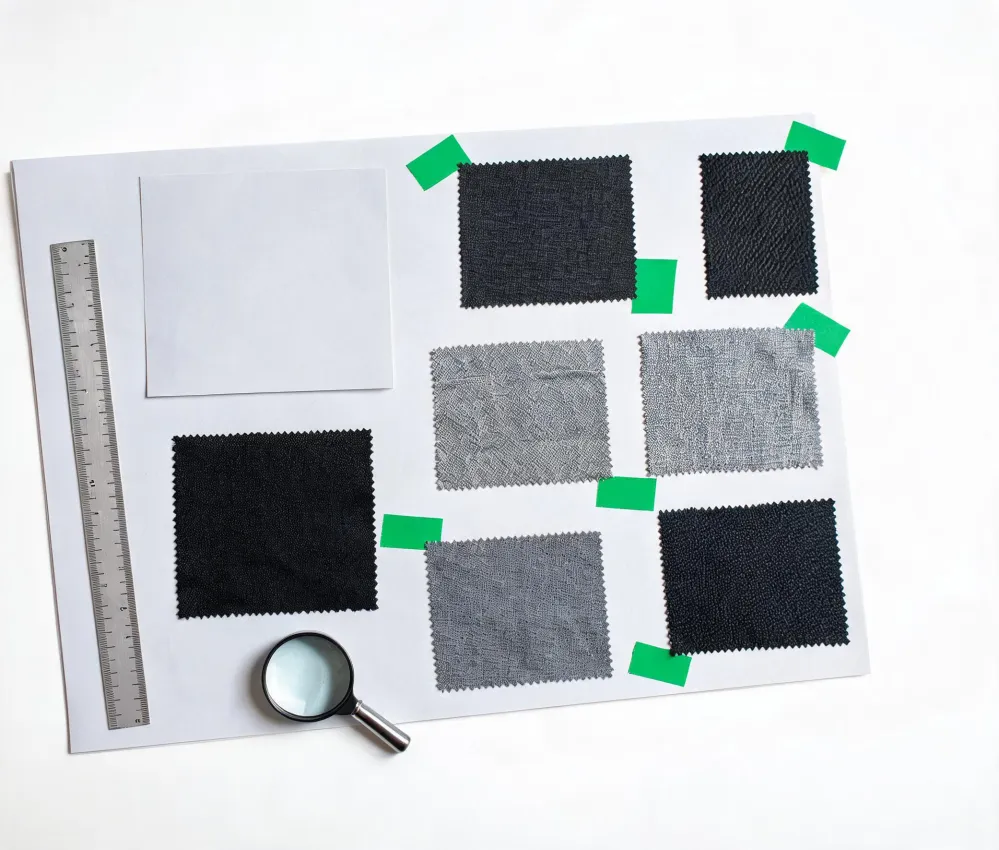
A reproducible review records the specimen identity, conditioning, method, equipment or laboratory, result, units and after-care state. An initial sample can be screened for fabric weight, usable width, air permeability, tear strength or dimensional stability, but bulk acceptance requires the agreed production reference and sampling plan.
Color route trade-off
Solution-dyed material can prioritize weathering and lot continuity, while imposing tighter minimum order quantities and a less flexible color-development route. Piece-dyed material can support a broader or faster color program, while requiring stronger dye-lot, colorfastness and wastewater controls. The program records which trade-off the application and forecast justify.
Sampling has a cost
Sample charges, minimums, color development and courier terms vary by construction and route. These are confirmed before work starts. A clear sample plan protects both the development schedule and the buyer’s ability to make a reliable decision.
Performance has boundaries
Higher hydrostatic pressure can come with changes in handfeel, air permeability and moisture transport. Abrasion results depend on the selected method, endpoint and specimen. Recycled content requires chain-of-custody evidence and can add color or supply constraints. Finishes may change after laundering, heat or prolonged UV exposure. These limits are recorded instead of hidden behind a generic performance label.
Commercial limits remain visible
Minimum order quantity is stated in meters or kilograms per construction and color. Development timing excludes delays caused by revised artwork, color reapproval or new validation scope. Quoted availability remains conditional until the selected route and production window are confirmed.